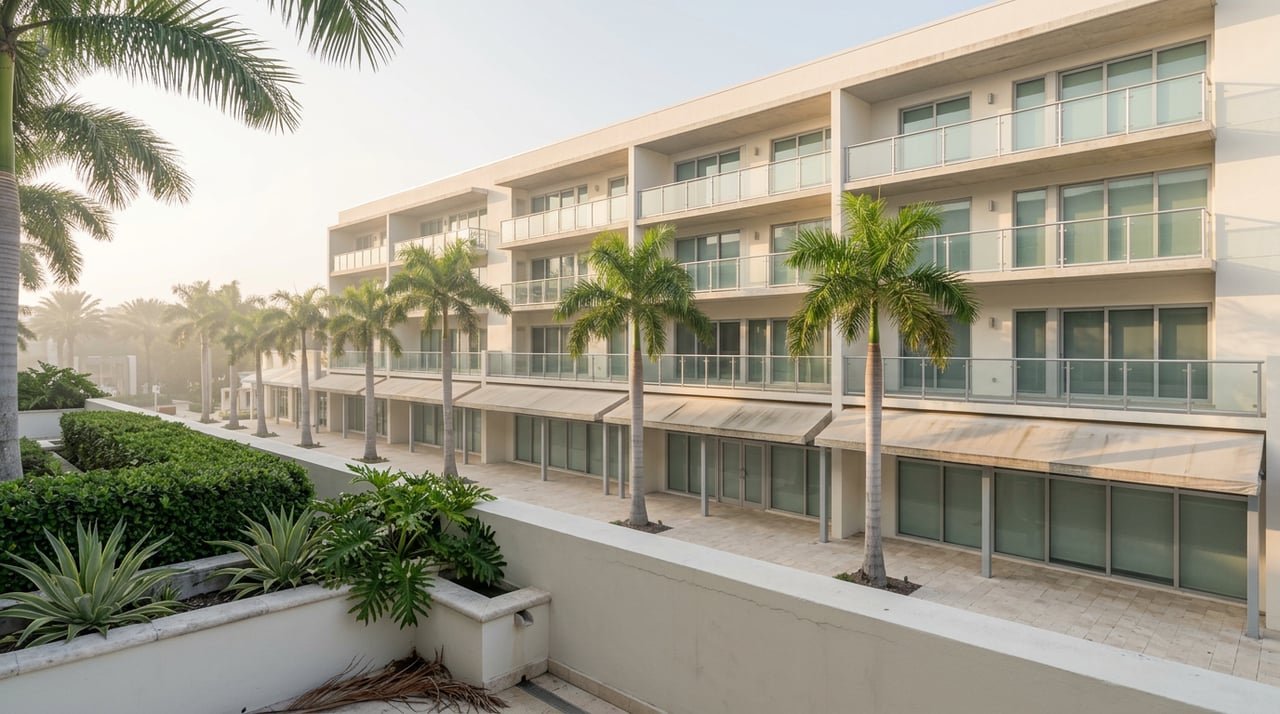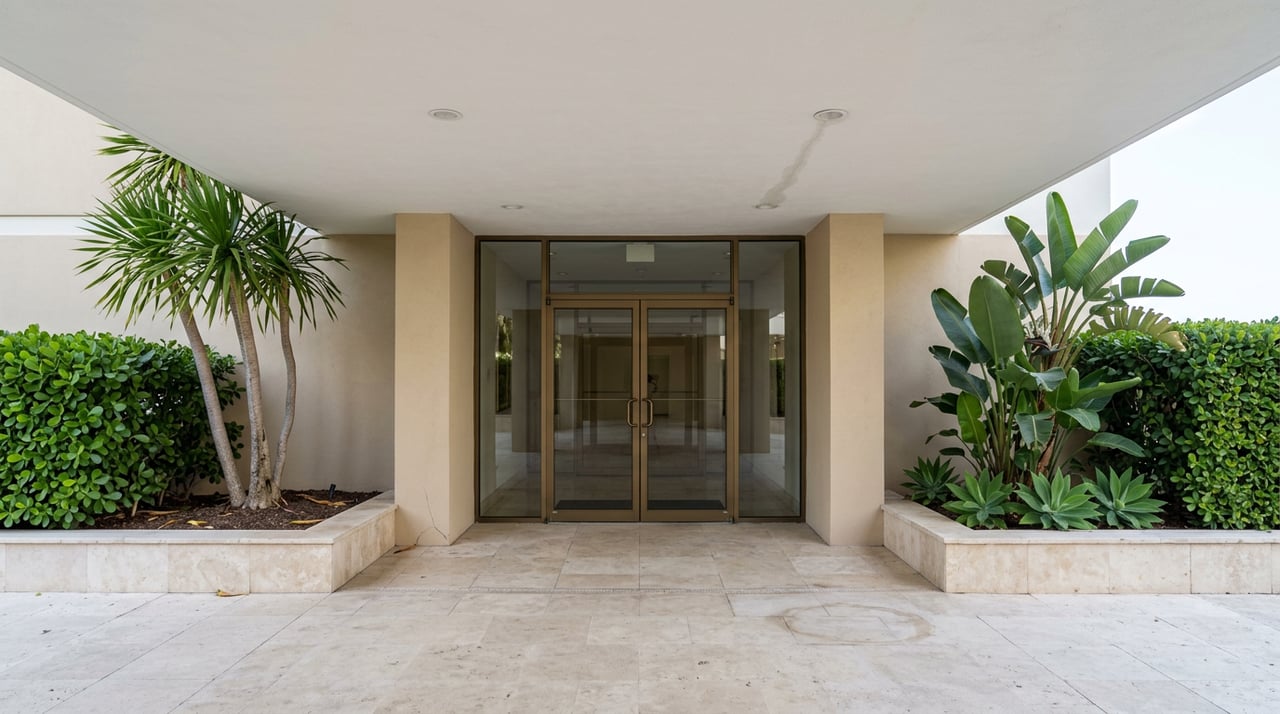
A buyer touring Williams Island this summer can look at two units, similar square footage, similar water view, similar price tag, and walk away with two very different financial commitments. One sits in the 4000 or 4100 building, where recent sales have cleared $720 to $890 a square foot. The other sits in the 6000 building, which is approaching its milestone inspection deadline under Florida's condo safety law. Same island. Same gate. Same marina view. Different underwriting story entirely, because one of those buildings has already told the state what it will cost to keep the structure sound, and the other hasn't finished that conversation yet.
That gap is the story of Aventura's condo market right now, and it's bigger than any single building. The number most buyers start with, an average price per square foot pulled from a portal search, is quietly averaging together two markets that no longer behave the same way.
The Number That Hides the Real Question
Search Aventura condos and you'll find a headline figure somewhere around $376 a square foot across all property types, and a separate luxury-tier figure of $687 a square foot for Q2 2026, up 6.1% from $648 in Q2 2025. Both numbers are accurate. Neither tells you what you actually need to know before you write an offer.
The reason is that Aventura's condo stock spans five decades of construction, and Florida spent the past four years rewriting the rules for how older buildings pay to stay standing. Coronado Towers, three 27-story buildings totaling 760 units, went up in 1975 and trades around $197 a square foot today. Turnberry Towers, built in 1982 with 318 residences, trades in the $350 to $400 range. Meanwhile Williams Island's newer towers post numbers double and triple that. A citywide average smooths all of that into one figure that describes nothing in particular.
The real driver of that spread isn't unit finish or amenity count. It's whether a building has already absorbed the cost of Florida's Structural Integrity Reserve Study mandate, or whether that cost is still sitting ahead of it.
What Changed, and When
Florida's SIRS rules trace back to the 2021 Champlain Towers South collapse in Surfside. The legislature responded with mandatory milestone inspections and reserve funding requirements for condo and co-op buildings three stories or taller. The rule that matters most for pricing took full effect this year: associations can no longer waive or underfund reserves for the eight SIRS-mandated structural components, a list that includes the roof, load-bearing walls, plumbing, electrical systems, and waterproofing. That ban applies to any budget adopted after December 31, 2024, and full reserve funding was required to begin by January 1, 2026, according to the Florida Division of Condominiums, Timeshares and Mobile Homes.
Milestone inspections themselves are triggered by building age. Under Florida Statute 553.899, a building must complete its first inspection at 30 years, or at 25 years if local authorities determine the building's proximity to salt water warrants it. Aventura's oldest towers, most of them built between the mid-1970s and mid-1980s, cleared that threshold years ago. What's new isn't the inspection requirement itself. It's that reserve funding for what those inspections find is now mandatory, not optional, and lenders and insurers can see the compliance status directly through the state's reporting system.
That last part matters more than most buyers realize. Once a building submits its SIRS data, that filing becomes visible to underwriters. A building that hasn't completed the process, or has completed it and found a shortfall, doesn't just risk a special assessment. It risks landing on Fannie Mae's list of buildings ineligible for conventional financing, which shrinks the buyer pool to cash only and puts direct downward pressure on resale value.
What This Looks Like Building by Building
Here's how that plays out across some of Aventura's most recognizable addresses, based on figures reported through mid-2026.
| Building | Vintage | What buyers are paying | Reserve and assessment picture |
|---|---|---|---|
| Coronado Towers | Built 1975, three 27-story towers | Roughly $197 per sq ft | Nearly 50 years old, now subject to full SIRS reserve funding under the 2026 mandate |
| Turnberry Towers / Turnberry Isle | Built 1980 to 1982 | $300 to $450 per sq ft for established Turnberry-era product | Decades past the original milestone trigger age |
| Turnberry Village | 1980s-era twin 14-story towers | $383 per sq ft across the twelve months ending May 2026 | Averaging 173 days on market, evidence of the caution now attached to 1980s-era stock |
| Porto Vita | Established development | Price per square foot climbed from $430 to $758 in the five years leading into late 2025, a 76% gain | HOA runs $3.05 per sq ft including club fees; no active assessment as of late 2025, though the 25-year recertification window is approaching |
| Privé | Williams Island development | As of late 2025, roughly 30 months of inventory, reflecting scarcity rather than weak demand | HOA at $2.19 per sq ft; no special assessments on record as of late 2025 |
| Bella Maré (Williams Island) | Established tower | N/A | HOA at $1.37 per sq ft; a special assessment for common-area upgrades runs through December 2026, separate from structural reserves |
| Williams Island 4000 / 4100 | Established towers | $720 to $890 per sq ft | Actively trading at a premium, reflecting confidence in reserve position |
| Williams Island 6000 | Same complex, separate building | Falls within the same broad price band | Approaching its milestone inspection deadline; buyers should confirm reserve funding and assessment status before offering |
The pattern across the table is the pattern across the market. Porto Vita's 76% appreciation didn't happen because the building got bigger or the view improved. It happened because a well-funded, well-governed association became a genuinely differentiated asset in a market where that used to be assumed and now has to be proven. Bella Maré's assessment, tied to cosmetic common-area work rather than structural deficiency, is a very different disclosure than a structural shortfall would be, and buyers who understand that distinction can negotiate from a position of knowledge instead of anxiety.
The Spread the Averages Don't Show
A June 2026 market report covering Aventura's condo segment above $1 million put the blended median sold price at $602 a square foot against a median list price of $675, an 11% spread that widens further in older buildings. The same report found a 93% sale-to-list ratio overall, meaning well-priced inventory in sound buildings is still moving close to asking. The pressure concentrates on pre-2010 towers carrying high HOAs, dated amenities, or unresolved reserve questions. That's a market splitting by building fundamentals, not softening across the board.
Miami-Dade County has responded to the affordability side of this squarely enough to build a public program around it. The county's Condominium Special Assessment Program was built to help owner-occupied condo owners cover recertification-related repairs, with zero-interest terms for moderate-income households over a 40-year loan term. The county paused new applications on August 5, 2025, to refine the program's structure and application process, with a relaunch originally targeted for early 2026, according to Miami-Dade's Housing and Community Development department. Owners in older Aventura buildings facing a first-time assessment should confirm the program's current application status directly with the county before assuming it's unavailable.
What to Ask Before You Offer
A low monthly HOA fee used to be a selling point. In 2026, it's a question. Before you write an offer on any Aventura condo built before roughly 2010, ask for three documents:
- The completed milestone inspection report, including Phase 2 findings if a Phase 2 was triggered
- The current Structural Integrity Reserve Study and whether the association's 2026 budget fully funds it
- Written disclosure of any pending, voted, or under-discussion special assessment, and whether it would be the seller's responsibility to settle before closing or yours to inherit after
None of these documents require a lawyer to request. Associations with 25 or more units are increasingly required to post governing documents and reserve studies for owners to review, and a seller's agent representing a well-managed building will usually produce them without friction. If a listing can't produce them, that's information too.
Frequently Asked Questions
Does a lower price per square foot in an older Aventura building mean a better deal? Not automatically. A lower price can reflect genuine value in a well-reserved building, or it can reflect a market discounting the risk of an assessment that hasn't been announced yet. The only way to tell the difference is to see the reserve study.
Is Aventura's older condo inventory a bad investment in 2026? Not inherently. Buildings that have already completed their SIRS and funded their reserves, even older ones, are being rewarded by buyers who understand what they're looking at. The risk sits specifically with buildings that haven't finished that process, not with age alone.
What happens if a special assessment is approved after I've already made an offer? Florida practice generally holds that assessments approved before closing are the seller's responsibility and those approved after closing become the buyer's. That timing detail is worth confirming in writing before you go under contract, not after.
Aventura's condo market isn't telling one story in 2026. It's telling two, and the average price per square foot is the wrong place to look for the difference. If you're comparing buildings and want a read on where a specific tower actually sits on its reserve and assessment timeline, the Juliana Savoia Group can walk through the documentation building by building before you make an offer. Request a Private Consultation to start that conversation.